

The framing is a trap. "Inbound vs outbound" sounds like a fork in the road where you pick a side and commit. In practice, treating it as either-or is how teams end up with a thin pipeline and a strong opinion about why.
Inbound and outbound are not rival philosophies. They are two motions that solve different problems at different stages, and the real question is never which one wins. It is which one fits your buyer, your price point, and where your company is right now, and how the two work together once you have both running.
This guide breaks down what each motion actually is, the differences that matter, clear examples, and a straight answer on when to lean into one over the other.
What is inbound sales?
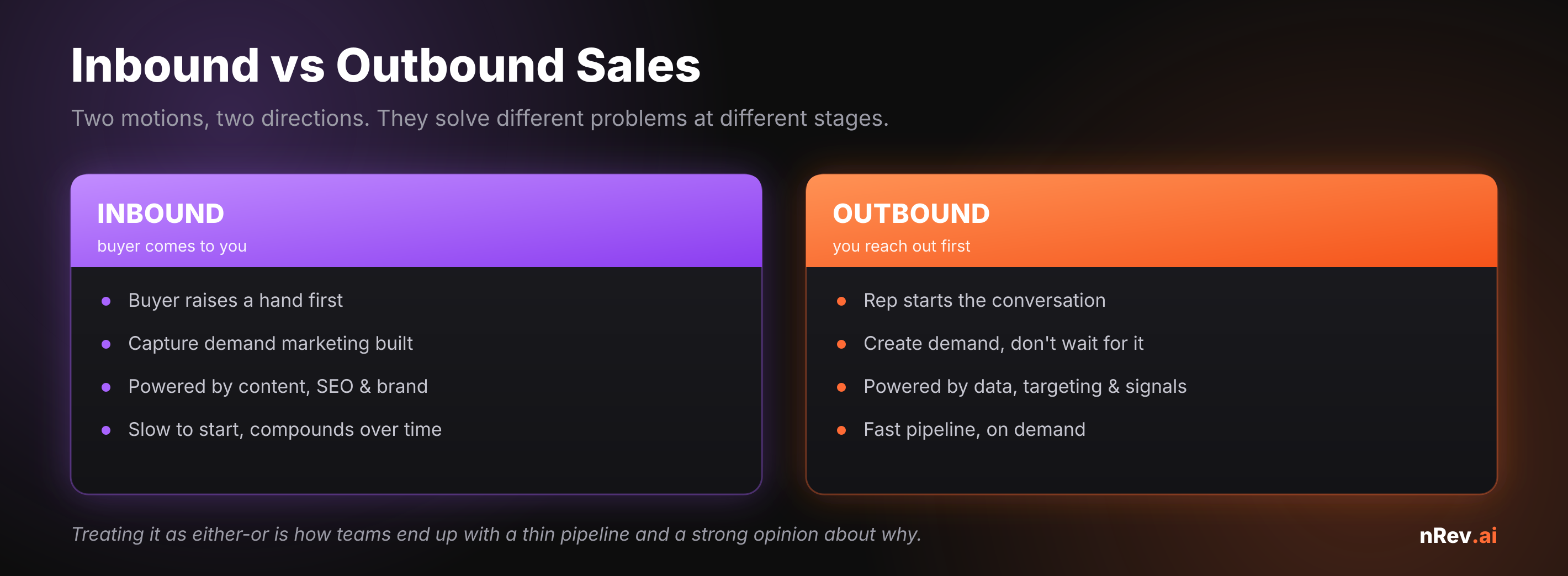
Inbound sales is the motion where the buyer comes to you. Someone reads your content, downloads a resource, requests a demo, or starts a free trial, and a rep engages a prospect who has already raised a hand. The intent exists before the conversation starts.
The work in inbound is mostly about capturing and converting demand that marketing created. Reps qualify the interest, understand the need, and guide a buyer who is already partway down the path. The hard part is upstream, in building the content, search presence, and brand that make people show up in the first place.
That is also the catch. Inbound depends on demand that already exists, and demand takes time to build. It is a powerful motion once it compounds, and a slow one before it does.
What is outbound sales?
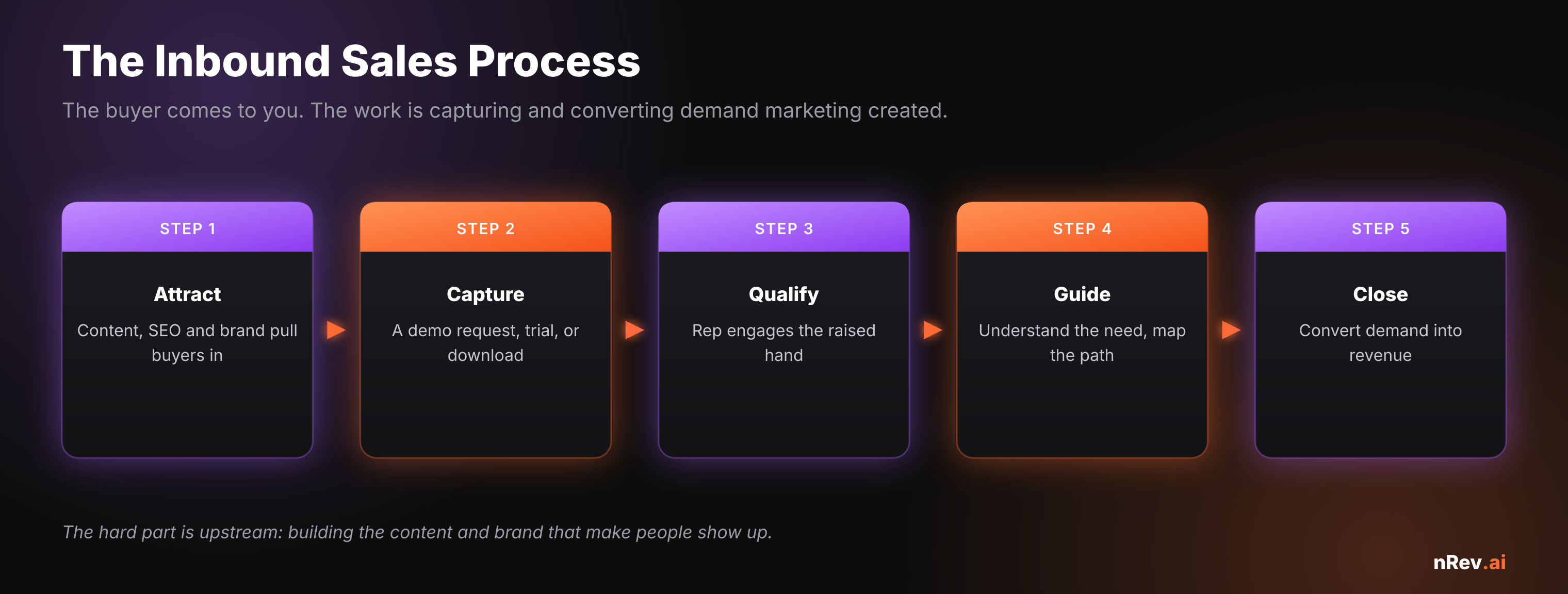
Outbound sales is the opposite direction. The rep initiates contact with a prospect who has not raised a hand, through channels like cold email, calls, and LinkedIn. Instead of waiting for demand, the team goes and finds the right accounts and starts the conversation.
The advantage is control. With outbound, you decide which accounts to pursue and when, which makes pipeline predictable rather than dependent on demand that may not exist yet. It is the only reliable way to reach high-value accounts that will never find you on their own, and the fastest way to create conversations when you enter a new market.
The cost is effort and precision. Outbound done badly is just noise, high volume with low relevance that burns lists and reputation. Outbound done well is research, targeting, and timing, which is why the best outbound today leads with signals rather than static lists.
Inbound vs outbound sales: the core differences
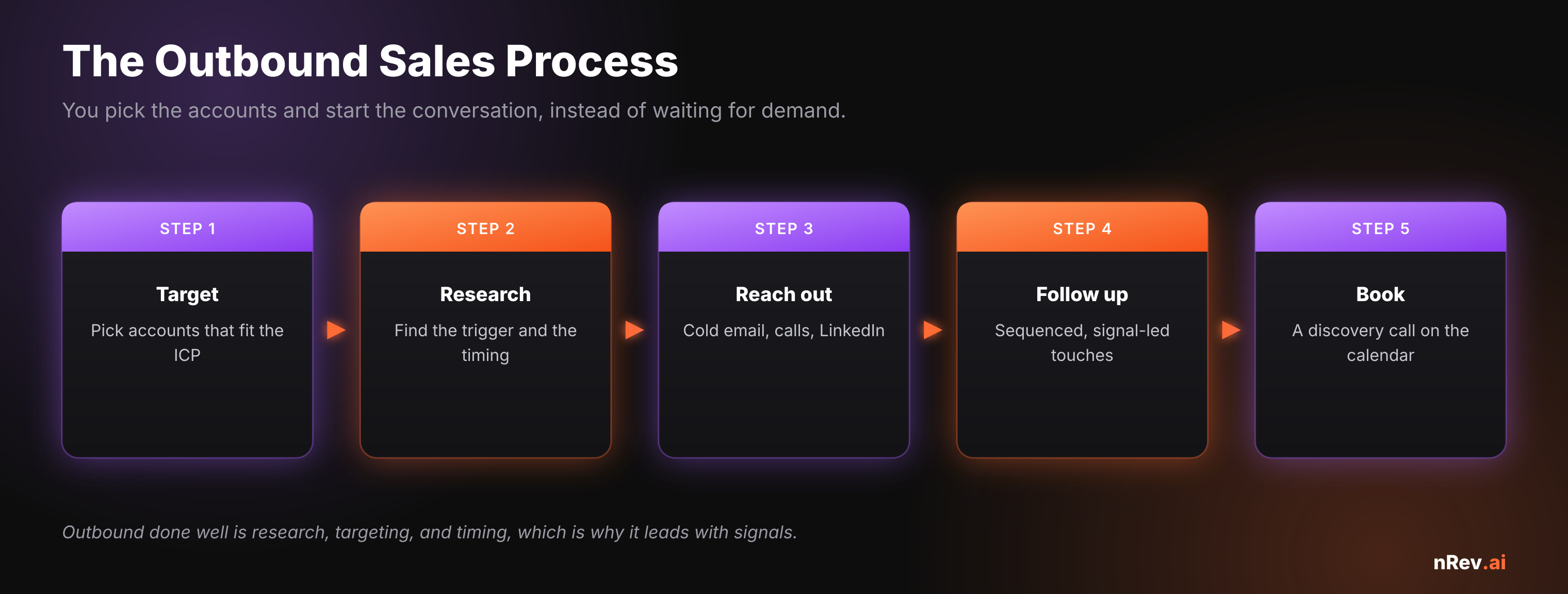
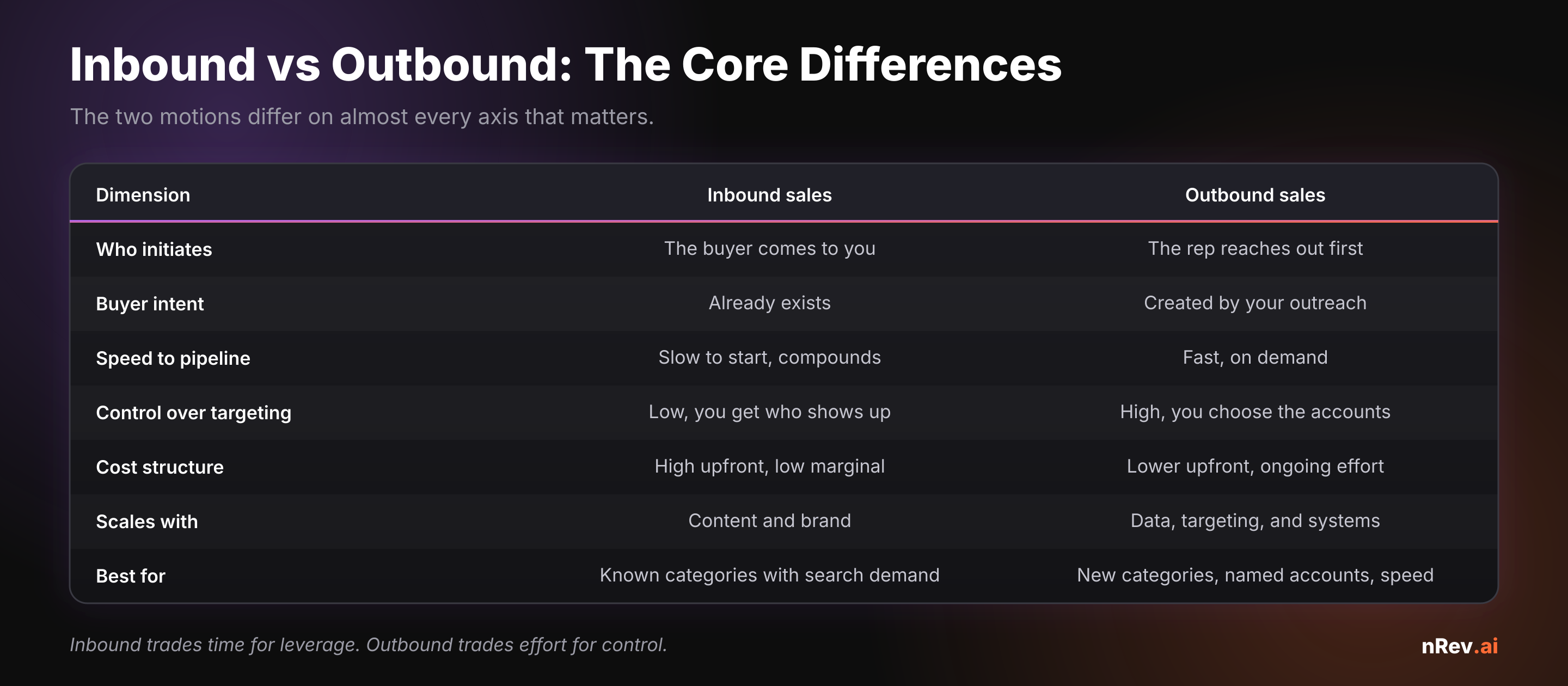
The two motions differ on almost every axis that matters, from who starts the conversation to how fast you see results. This is the short version.
| Dimension | Inbound sales | Outbound sales |
|---|---|---|
| Who initiates | The buyer comes to you | The rep reaches out first |
| Buyer intent | Already exists | Created by your outreach |
| Speed to pipeline | Slow to start, compounds over time | Fast, on demand |
| Control over targeting | Low, you get who shows up | High, you choose the accounts |
| Cost structure | High upfront, low marginal | Lower upfront, ongoing effort |
| Scales with | Content and brand | Data, targeting, and systems |
| Best for | Known categories with search demand | New categories, named accounts, speed |
The pattern underneath the table is simple. Inbound trades time for leverage, and outbound trades effort for control. Neither is cheaper or better in the abstract. They are priced differently, and the right choice depends on what you can afford to spend and how fast you need results.
When inbound sales makes sense
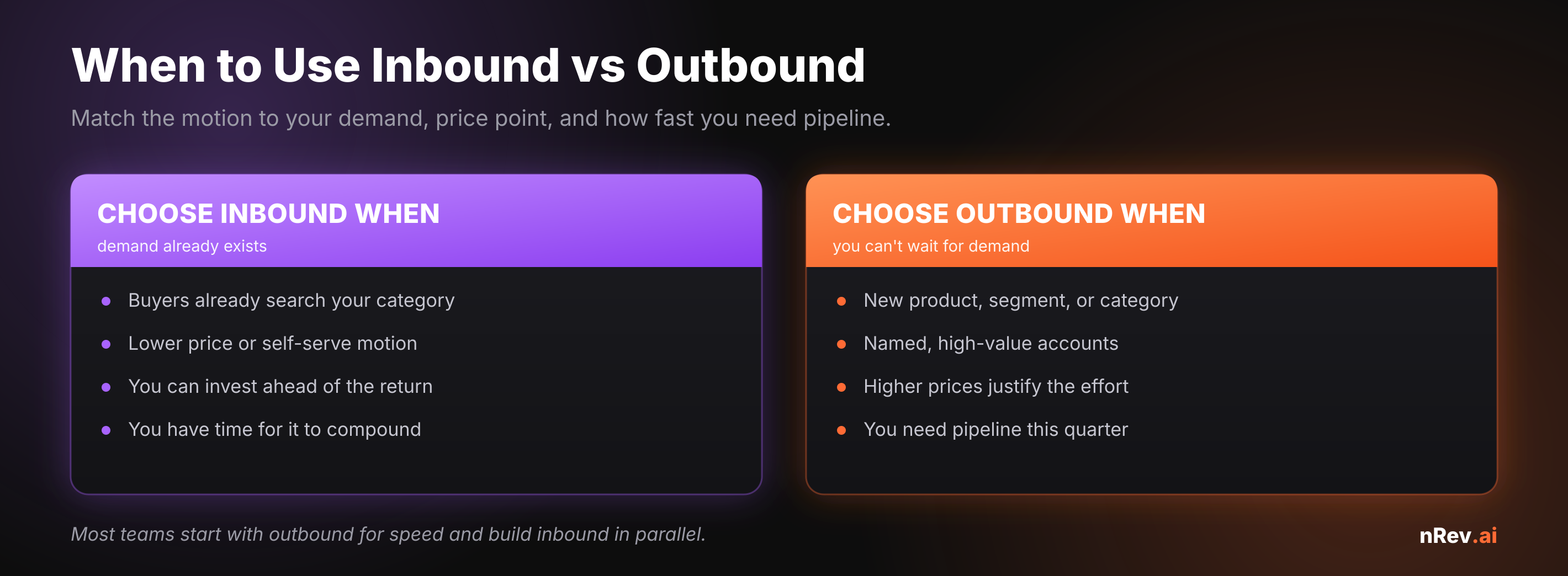
Inbound is the stronger bet when buyers are already searching for what you sell. If your category is established and people type the problem into a search bar, capturing that demand is more efficient than manufacturing it.
It also suits lower price points and high-volume motions. A self-serve or product-led model lives on inbound, because a credit-card purchase cannot support a high-touch sales team. And it rewards companies that can invest ahead of the return, since inbound compounds slowly and pays off later.
The honest limit is timing. If you need pipeline this quarter, inbound alone will not get you there. The content you publish today does not rank, convert, and close on the timeline most revenue targets demand.
When outbound sales makes sense
Outbound is the stronger bet when you cannot wait for demand to build, or when the demand does not exist yet. New product, new segment, new category, these all call for outbound, because nobody is searching for a solution they do not know exists.
It also fits named, high-value accounts. When twenty logos would change your year, you do not wait and hope they find you. You go after them directly with a go-to-market motion built around those specific accounts. And it suits higher price points, where the deal size justifies the human effort of research and personalized outreach.
The condition is precision. Outbound only works when the targeting is tight and the timing is right, which is the part most teams underestimate. Reaching the right account at the wrong moment is nearly as wasteful as reaching the wrong account.
Why most winning teams run both
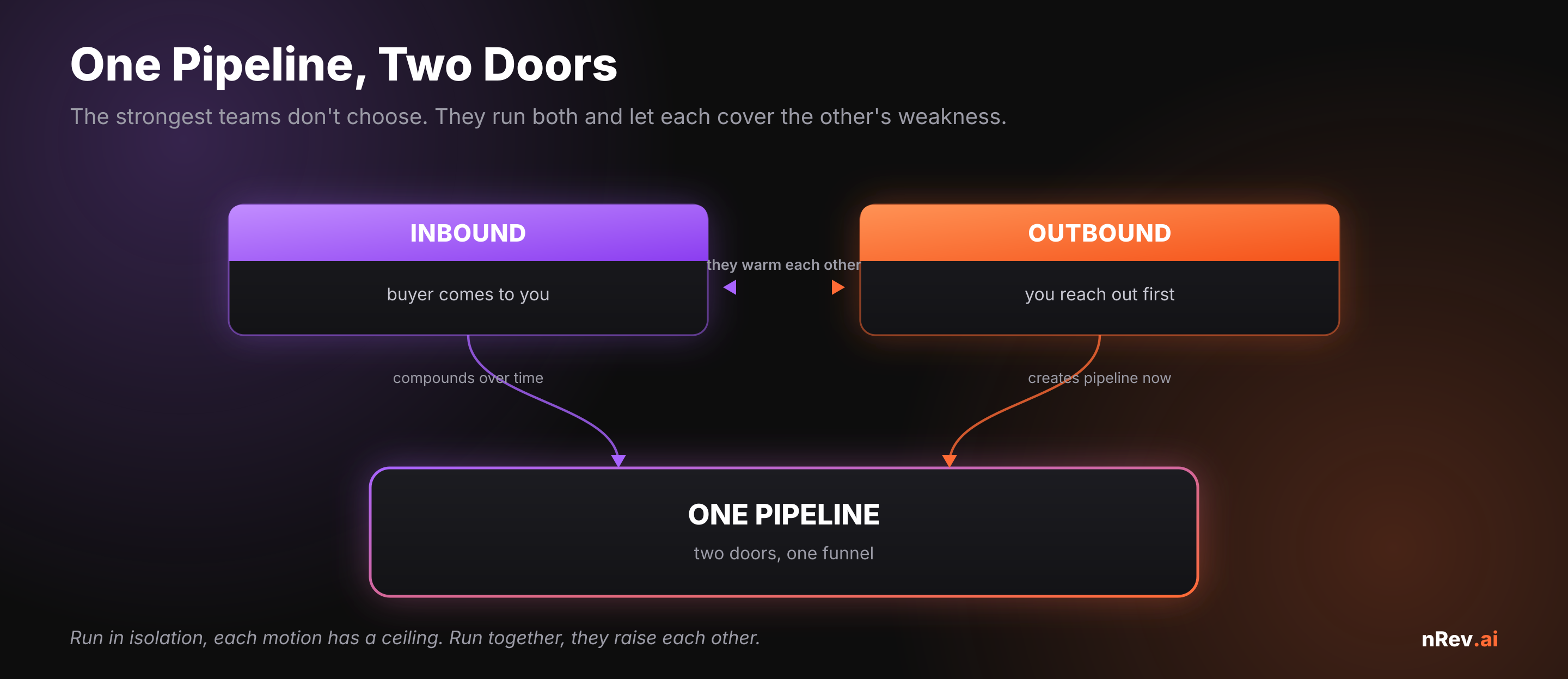
Here is where the versus falls apart. The strongest go-to-market teams do not choose. They run inbound and outbound as one motion, and they let each cover the other's weakness.
Outbound creates pipeline now while inbound compounds in the background. Inbound surfaces buyers with intent while outbound reaches the accounts that intent never touches. Better still, the two feed each other. A prospect who read your content becomes a warmer outbound target. An account you reached cold starts engaging with your inbound channels. Run in isolation, each motion has a ceiling. Run together, they raise each other.
The teams that struggle are usually the ones treating these as competing budgets and competing teams. The teams that win treat them as one pipeline with two doors.
Making outbound actually scale
If inbound is mostly a content and brand problem, outbound is mostly a systems problem. It breaks down not because the idea is wrong but because the execution is manual. Someone has to build the list, watch for signals, enrich the contacts, personalize the outreach, run the follow-ups, and keep the CRM current. Done by hand, it falls apart the moment the list grows.
The version that scales is not more volume. It is signal-based outbound triggers that tell you which accounts are worth a touch right now.
This is the layer nRev is built for. As the agent OS for GTM teams, it runs the outbound motion as one connected workflow, detecting the signal that says an account is ready, enriching the contact, and triggering personalized outreach at the right moment, without a person stitching the steps together. The plays are shaped by 10,000+ deployed GTM workflows, so the system reflects what has actually moved pipeline rather than what sounds good on paper.
That is what turns outbound from a grind into a motion you can scale, and it is what lets a lean team run outbound and inbound together instead of choosing. If you want to see it work, the signal-based outbound playbook is the place to start.
Frequently asked questions
What is the difference between inbound and outbound sales?

Is inbound or outbound sales better?
What is an example of outbound sales?
What is an example of inbound sales?
Can you do both inbound and outbound sales at the same time?
Which is cheaper, inbound or outbound sales?
Is cold calling inbound or outbound?
How do you decide which motion to start with?