

Intro
LinkedIn is where most of your buyers already show intent in public. These six tools turn that public activity, posts, reactions, comments, mentions, into a qualified, exportable list. Two of them run on a schedule and only ever surface what's new since the last check. Between SDRs building lists and AEs prepping for a call, this category tends to see the most repeat use of the four, simply because LinkedIn activity refreshes daily and the signal goes stale fast. This is the first of four deep-dive posts behind 18 Real AI Workflow Examples, going node by node through the LinkedIn Signals category specifically. Full diagram legend is over there if you land here first.
Get LinkedIn Post Engagers
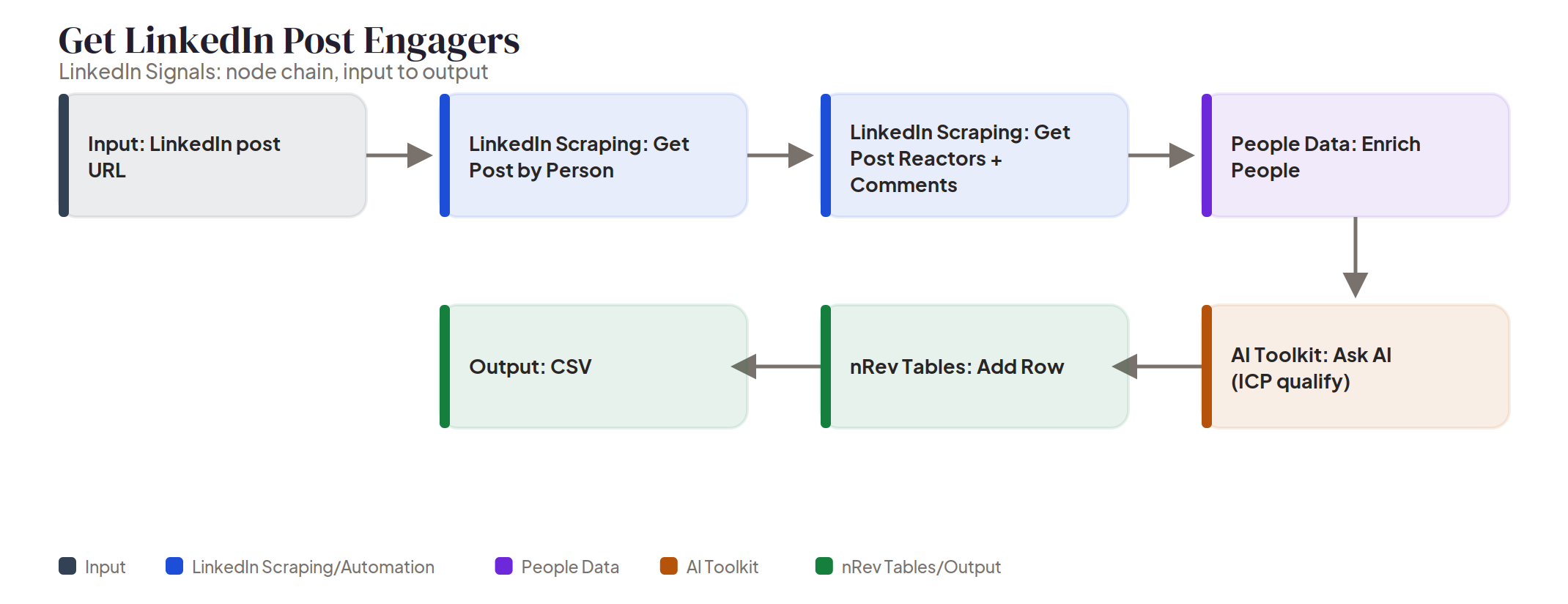
Give it a LinkedIn post and it reads everyone who touched it. A LinkedIn Scraping node pulls the post itself, then a second pass reads every reaction and comment on it from the last 30 days. A People Data node enriches each name it finds, Ask AI qualifies the list against your ICP, and everything lands in an nRev Table. Simple chain, but it answers something you'd otherwise track by hand: who has already, publicly, raised their hand on this exact piece of content. Run it right after a founder or exec post gets real traction, before the engagement cools off and the list gets harder to act on. Try it now
Get Competitor Engagers
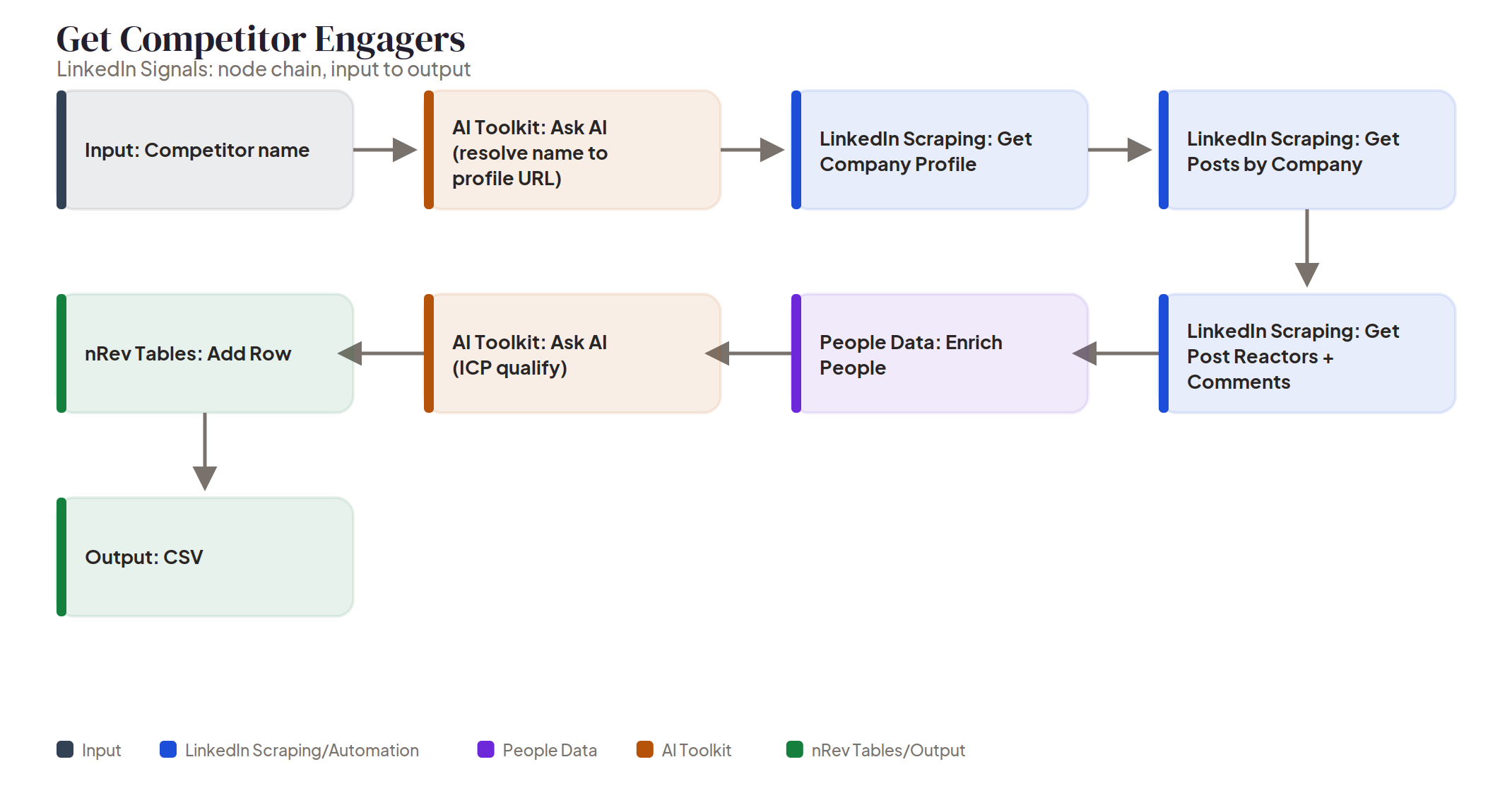
Give this a competitor's name, not even a profile URL. Ask AI resolves it to the right LinkedIn company page first. From there, a LinkedIn Scraping node pulls the competitor's own recent posts, a second reads who reacted or commented on each one, People Data enriches every name, Ask AI qualifies the list against your ICP, and it lands in an nRev Table. The output is a list of people already engaging with a competitor's own content, worth reaching before that deal is decided somewhere else. Best run right after a competitor ships something people react to, a launch, a funding announcement, a pricing change, and it's usually whoever owns competitive intel who runs it. There's a short recorded walkthrough of this tool and Competitor Mention Monitor below on nRev's YouTube channel, GTM Play: Competition Tracker (youtube.com/watch?v=r39IZe57m_0). Try it now
Keyword Content / Lead Finder
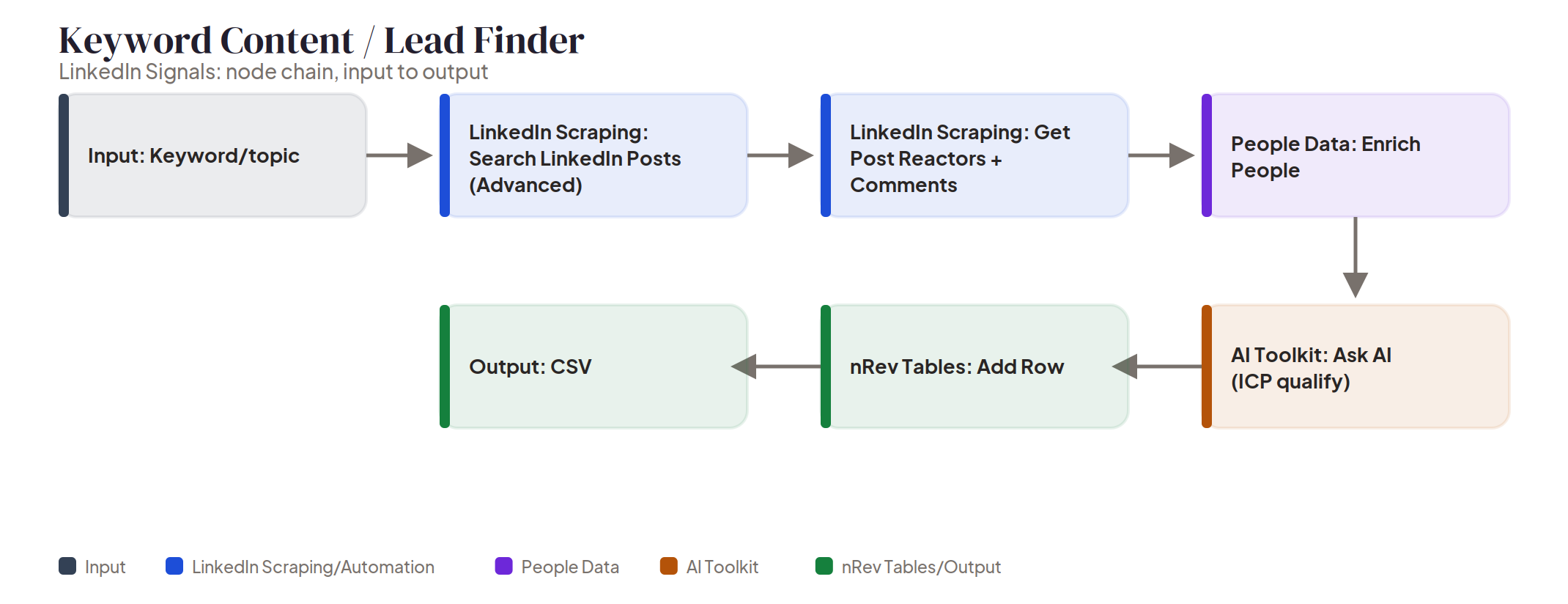
This one starts from a topic instead of a person or company. Give it a keyword and a LinkedIn Scraping node searches recent posts that match it, then reads who's reacting and commenting on each match. People Data enriches every name, Ask AI qualifies against your ICP, and the list lands in an nRev Table. It's a prospect list built from people already talking publicly about the exact problem you solve, not a list you inferred was relevant. Good standing weekly job for whoever owns top-of-funnel, the same keyword search keeps surfacing a fresh set of posts every time it runs. Try it now
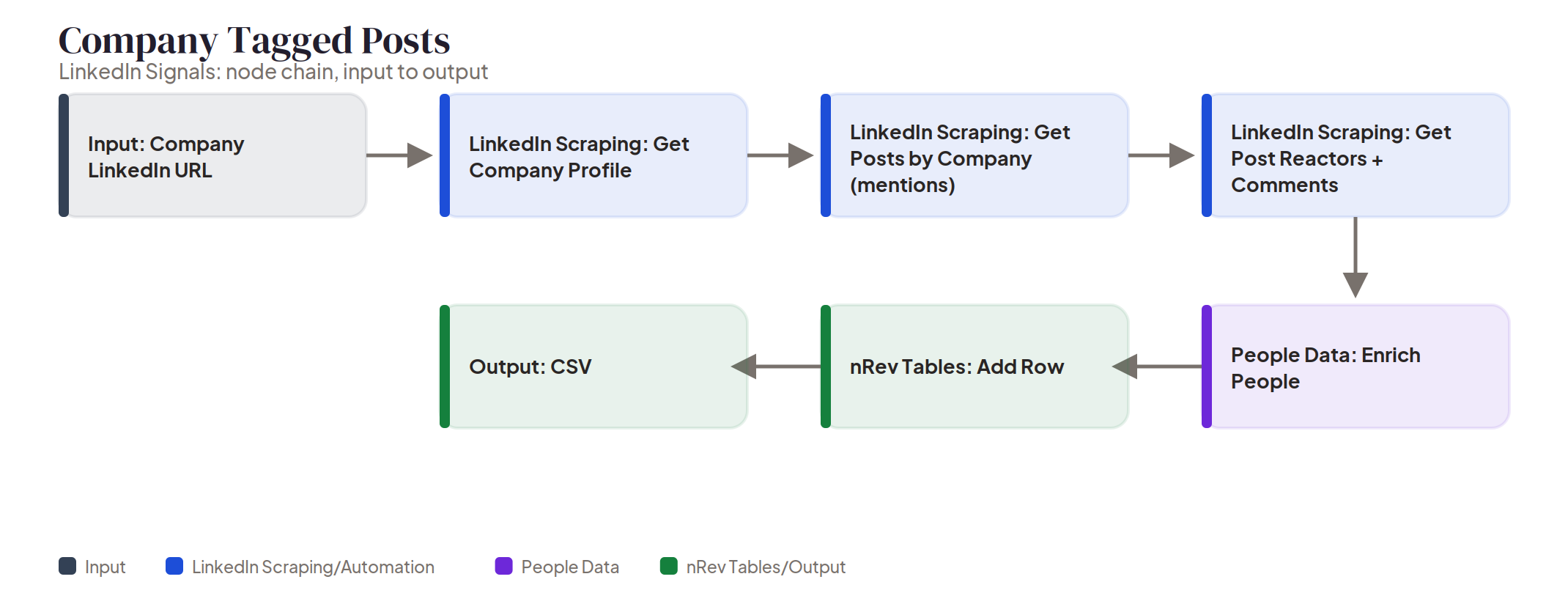
Company Tagged Posts
Point this at a company's LinkedIn page and it tracks their orbit. A LinkedIn Scraping node reads the company profile, a second pass finds every post that tags or mentions them, a third reads who engaged with each one. People Data enriches the names it finds and everything lands in an nRev Table. No ICP-qualification step in this one, on purpose. The point here is visibility into who's paying attention to a target account, not a pre-filtered pipeline. Run it before an ABM push into a named account, so whoever owns that account walks in already knowing who's paying attention in its orbit. Try it now
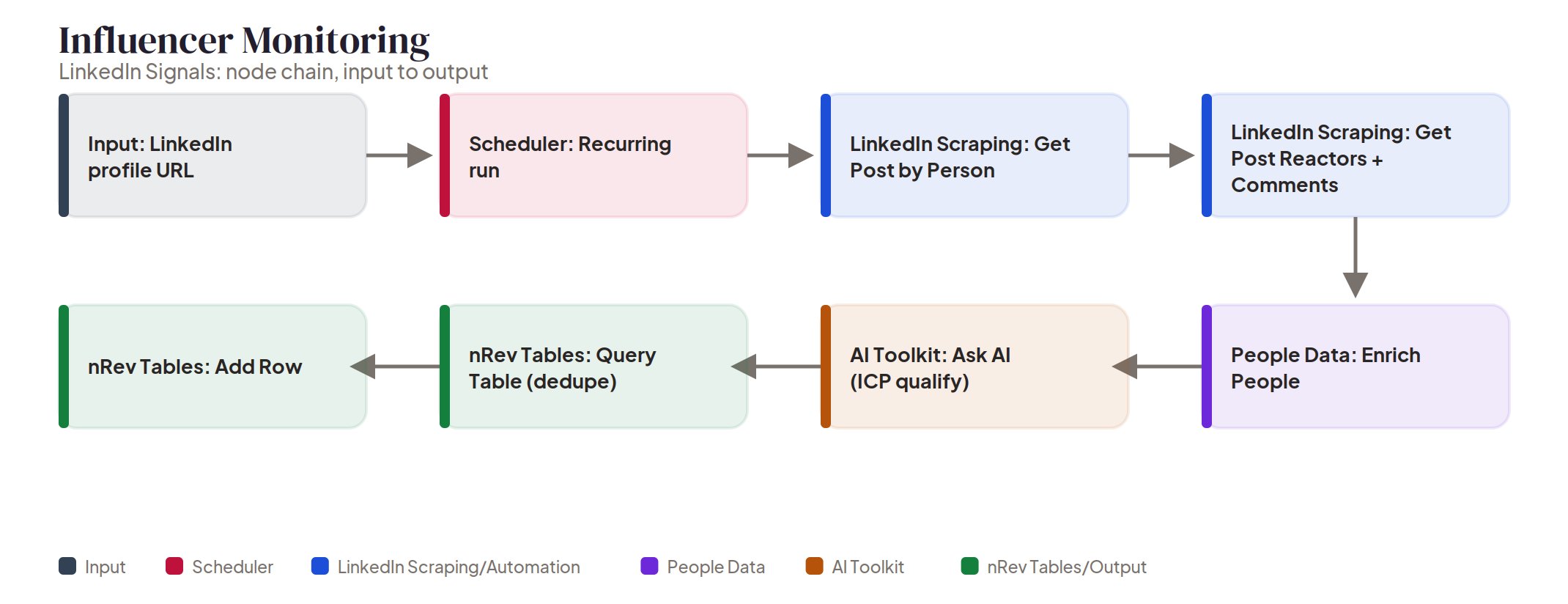
Influencer Monitoring
Same chain as Get LinkedIn Post Engagers above, run on a schedule instead of once. A Scheduler triggers it on a recurring basis against one profile, a LinkedIn Scraping node pulls their latest post, a second reads reactors and commenters, People Data enriches, Ask AI qualifies against your ICP, and an nRev Table checks what it's already seen before adding a row. The only real difference from Get LinkedIn Post Engagers is the wrapper: a schedule and a dedupe check, so you only ever see new engagers, not the same list handed back every week. Point it at anyone whose audience reliably overlaps your ICP, a founder, an analyst, an industry voice, and it becomes a standing feed instead of something you remember to check. Try it now
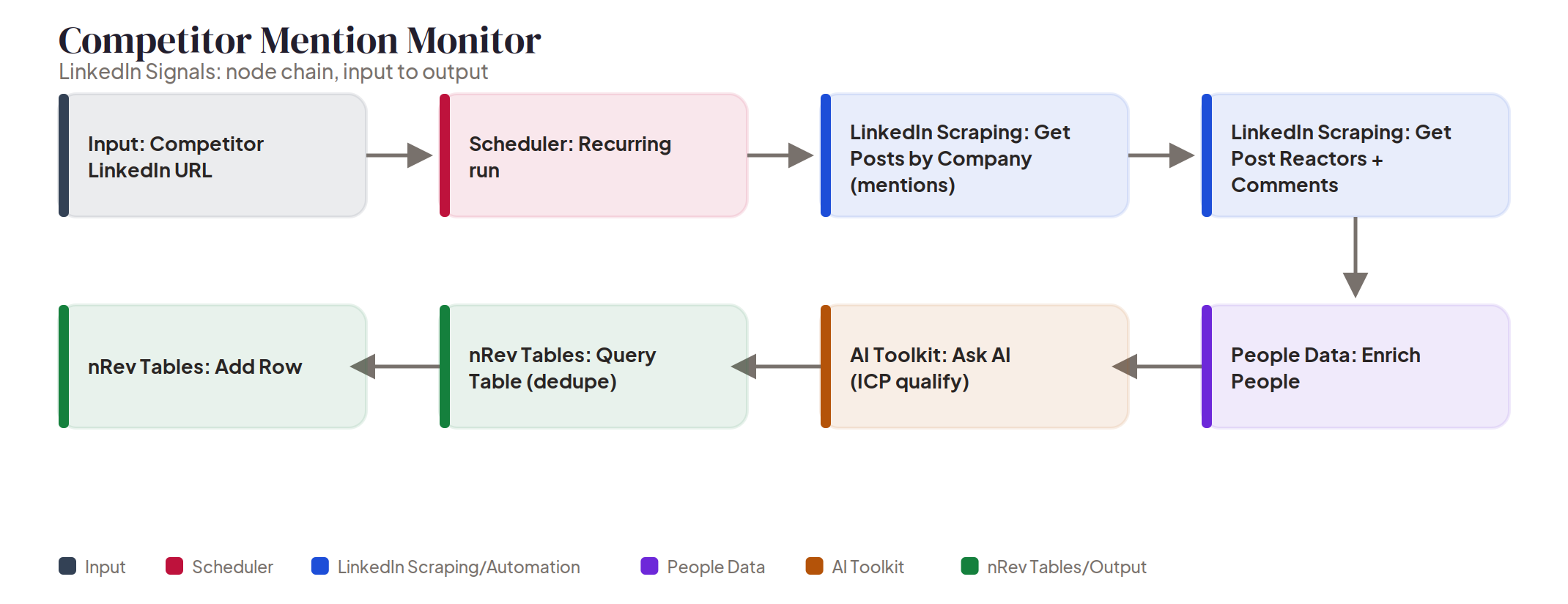
Competitor Mention Monitor
This one watches for posts that mention or tag a competitor, not the competitor's own posts, which makes it a different read than Get Competitor Engagers above. A Scheduler triggers a recurring run, a LinkedIn Scraping node finds new posts mentioning the competitor, a second reads who reacted or commented on each, People Data enriches every name, Ask AI qualifies against your ICP, and an nRev Table dedupes against what it already knows before adding a row. The result is a constantly refreshing feed of who's engaging with chatter about a competitor, instead of a one-time check that goes stale immediately. This is the one built for an always-on competitive displacement motion rather than a single deal, so it tends to sit with whoever owns win-loss or competitive intel long term. Same YouTube walkthrough as Get Competitor Engagers above covers the mechanism. Try it now
FAQ (category-specific, in addition to the pillar's FAQ)
What's the difference between Get Competitor Engagers and Competitor Mention Monitor?
