Start with the work that eats hours and needs no judgment. Here's how to spot it.
The gap between "we should automate that" and a working agent used to be a project. A spec, an engineer, a few weeks. In nRev it is an afternoon.
Which means the hard part isn't building anymore. It's knowing what to build.
So start there. Before you open a canvas, find the task actually worth handing to an agent.
How to pick what to build
1. List the work that eats hours and needs the least judgment
Go person by person on your team and write down the recurring, manual tasks: the prospecting, the follow-up chasing, the list cleaning, the reporting. Frequency times time spent is your first filter.
2. Keep the ones with clear rules
An agent is only as good as the judgment you can describe. If you could explain how to do the task to a new hire in a few sentences, it is a fit. If it takes an hour of context and gut feel, it is not, at least not yet.
3. Make sure the output has a home
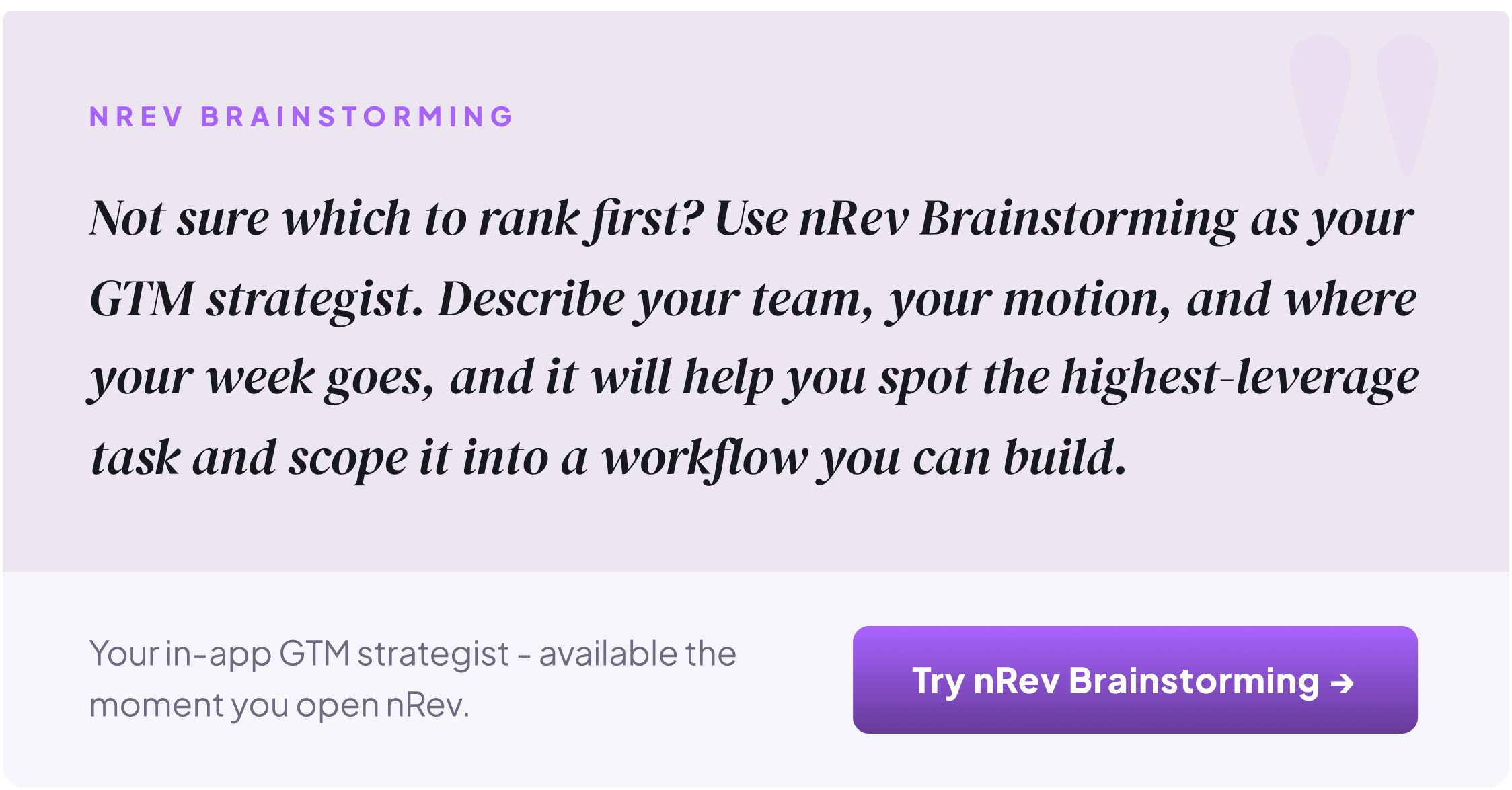
The best agents drop their answer into the place your team already works, usually Slack, not another dashboard nobody opens. If you cannot name where the result should land, the task is not ready.
4. Start with one and prove it
Ship it to a small group, measure the time it gives back, then expand. One agent people actually use beats five nobody adopts.
Two examples, built in minutes
We ran a live session recently and built two of these start to finish, in front of the room. Both came straight out of the process above: high volume, low judgment, output into Slack.
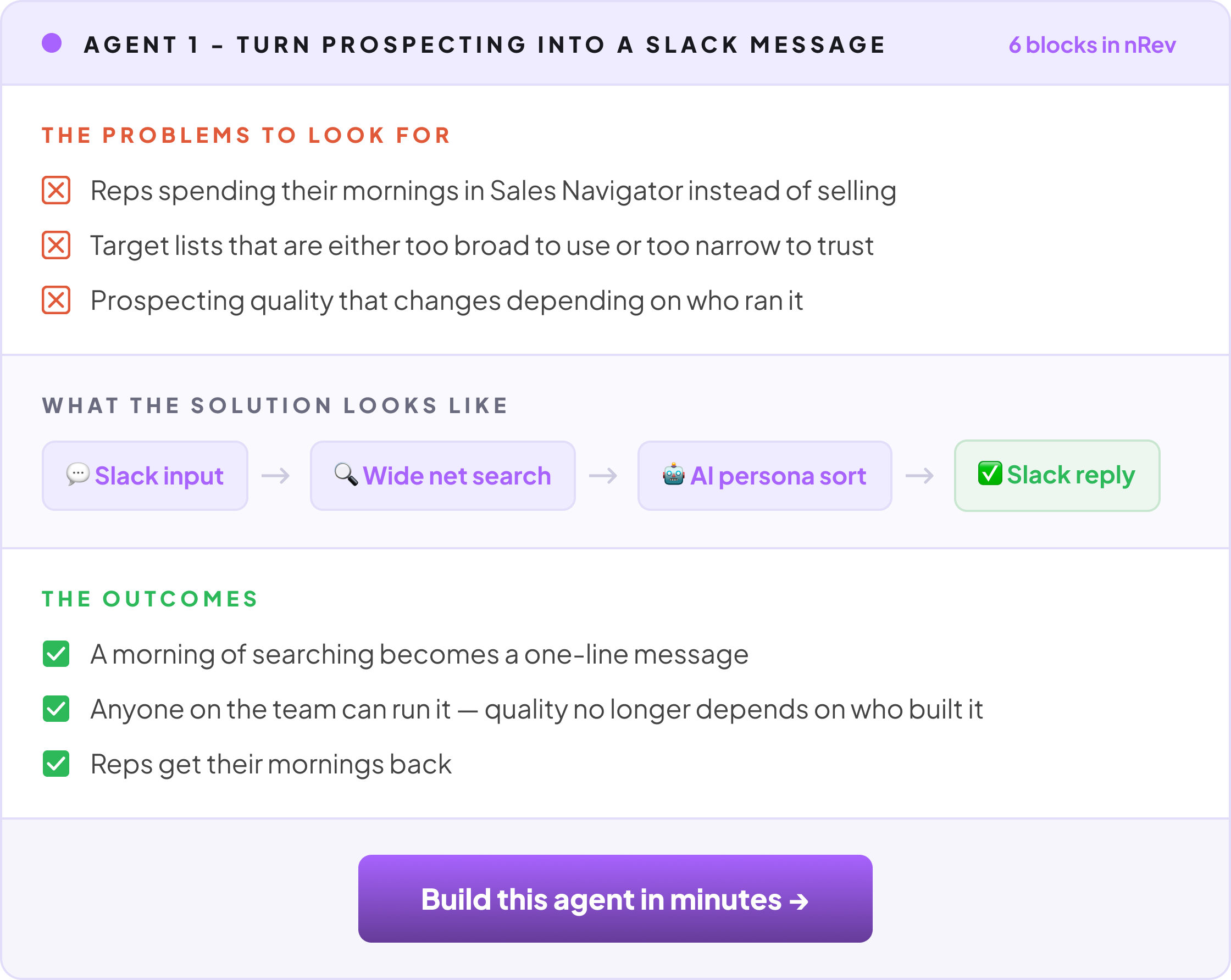
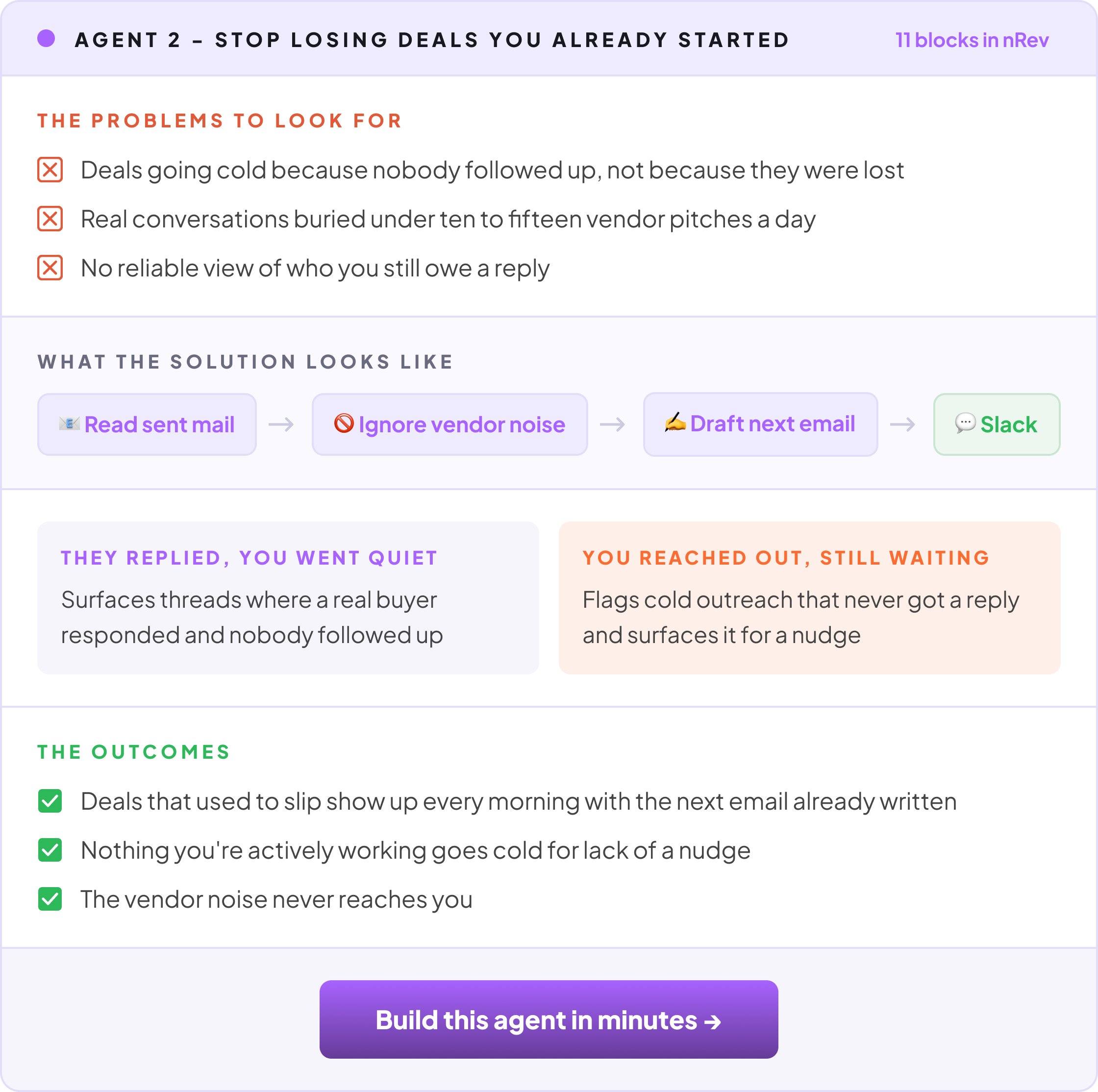
Both agents can be configured in nRev, and they take minutes to set up: import the file, connect Slack or Gmail, describe your ICP in plain English, and they run. Everyone in the session walked out with both already in their workspace.
So pick your path. Sign up for nRev and import both as-is, talk to your in-app GTM strategist about where your team is losing the most time, or just open a canvas and start building.