

Up to 98% of B2B visitors leave your site without a trace - and most of them are researching you on purpose. Here’s how to identify anonymous visitors, what match rates are realistic, and how to do it compliantly.
The short version
- The vast majority of B2B visitors leave anonymous - identifying them is found pipeline.
- Four methods, traded off by match rate: reverse-IP, cookie/pixel, identity graph, CRM de-anon.
- Company-level match rates of 15–40% are normal; person-level is harder and more sensitive.
- Speed from identify to outreach - and clean GDPR/CCPA handling - is what turns visits into meetings.
Most teams pour budget into driving traffic and almost none into capturing it. The result: according to Marketo’s widely-cited benchmark, up to 98% of B2B website visitors leave completely anonymous - no form, no name, no follow-up. That’s not a small leak. It’s the majority of the audience you already paid to attract, walking out unidentified.
And they’re anonymous on purpose. Gartner finds 75% of B2B buyers prefer a rep-free buying experience, doing the bulk of their research before they ever fill out a form. Waiting for a “contact us” click means waiting out most of your pipeline. Identifying anonymous visitors is how you re-enter a journey that’s happening without you. This is a hands-on guide to the methods, their real match rates, and how to do it compliantly - for the broader overview, see our pillar on website visitor identification.
The 4 ways to identify anonymous website visitors
There’s no single technique - there are four, and each trades match rate for detail. Most mature teams layer two or three rather than relying on one.
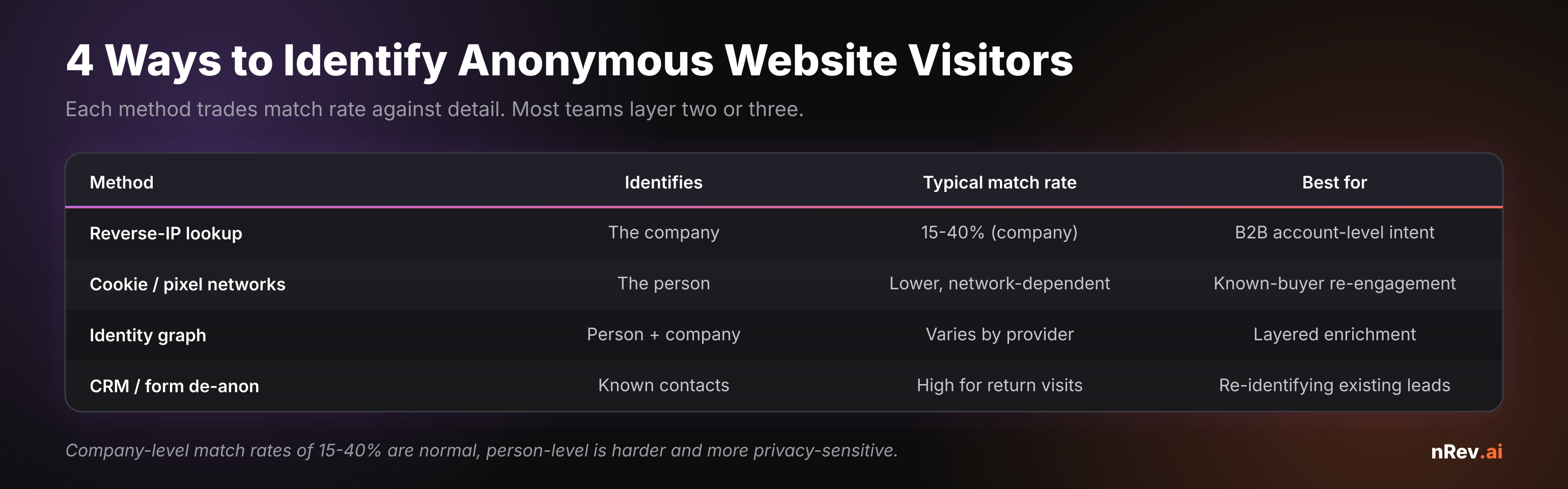
Reverse-IP lookup resolves a visit to the company by matching its IP to a firmographic database - the workhorse for account-level intent, but company-level only. Cookie and pixel networks can reach the individual person when they’re in the network, at lower and more variable match rates. Identity graphs stitch signals across sources to infer person plus company. And CRM or form de-anonymization re-identifies people you already know when they return. Pick the mix that matches whether you need account-level intent or person-level contact.
From anonymous visit to booked meeting
Identification is step one of five - and on its own it produces a list, not pipeline. The pipeline comes from what you do in the minutes and hours after.
An identified visit is a first-party signal, and it is worth scoring alongside the other first-party signals you already collect.
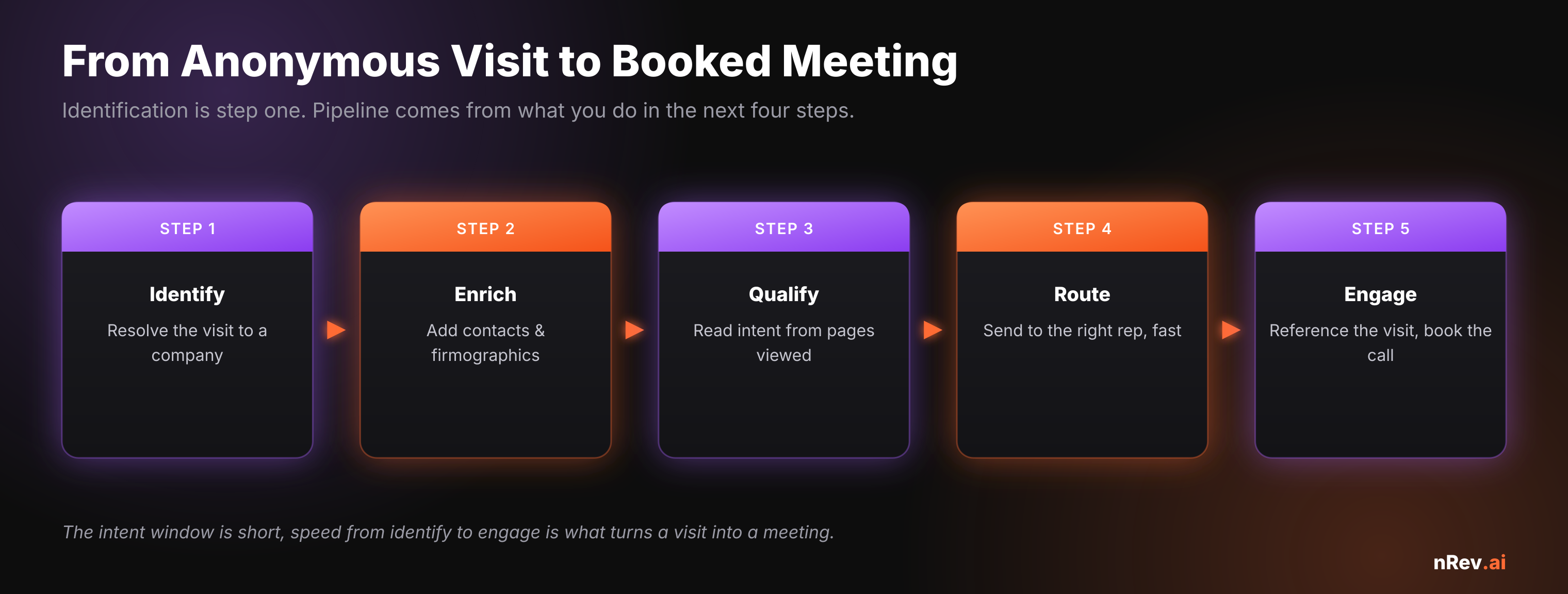
The intent window is short, so speed matters more than polish. Enrich the identified account with contacts, read intent from the pages they viewed (pricing and comparison pages signal far more than a blog read), route to the right rep instantly, and reach out referencing the specific context. Tie it into your B2B buying signals so a visit combines with other triggers, and pair it with lead enrichment tools to fill the contact gaps the identification leaves.
The match-rate reality - and staying compliant
Two things keep visitor identification honest: realistic expectations and clean compliance. On match rates, company-level identification of 15–40% is normal - anyone promising near-total identification of every visitor is overselling. Remote and residential IPs, VPNs, small or stealth companies, and declined cookie consent all cap what’s reachable.
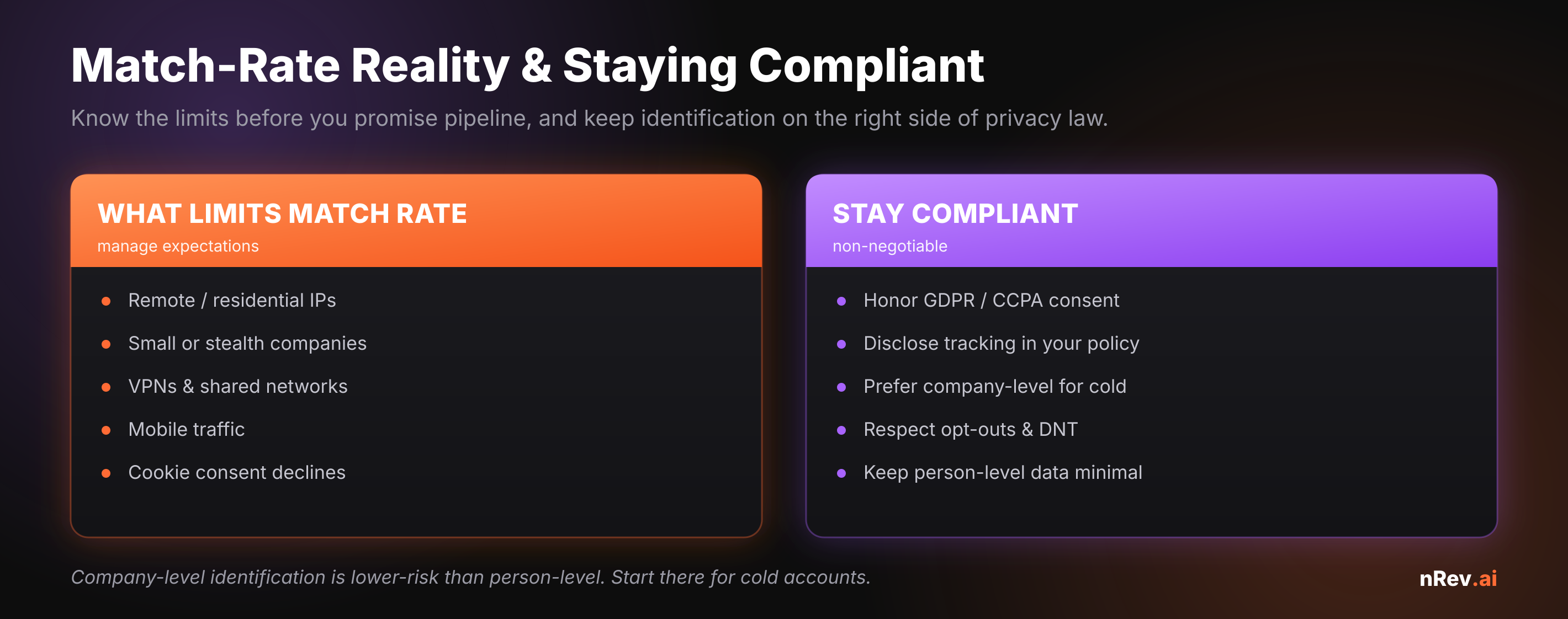
On compliance, treat it as non-negotiable rather than an afterthought. Honor GDPR and CCPA consent, disclose tracking in your privacy policy, respect opt-outs and Do-Not-Track, and keep person-level data minimal. The safest default for cold accounts is company-level identification, which carries far less privacy risk than resolving a named individual - start there and reserve person-level for contacts who already have a relationship with you.
How nRev AI turns identified visitors into meetings
Most visitor tools stop at the alert: they show you a list of companies and leave the follow-through to you. By the time a rep notices, enriches, and writes an email, the intent window has usually closed. nRev AI closes that gap. When a target account shows up on your site, nRev cross-references the visit against your other signals - hiring, funding, competitor research - enriches the right contact, and queues a personalized first touch the same day, routed to the rep who owns the account. You see who’s on your site; nRev makes sure they hear from you while the intent is still live.
Stop watching anonymous visitors leave
nRev AI identifies the companies on your site, enriches the right contacts, and turns each high-intent visit into a routed, personalized outreach - automatically, the same day. You define the trigger and the play; nRev runs the visit-to-meeting workflow end to end.
Turn your traffic into pipeline →
For the company-vs-person mechanics and the broader tool landscape, see our guides to website visitor tracking and turning visits into outbound sales automation.
Frequently asked questions
How do you identify anonymous website visitors?

Can you identify website visitors without a form fill?
What is a typical website visitor identification match rate?
Is website visitor identification GDPR compliant?
What’s the difference between company-level and person-level identification?